
by Marianne Rancourt, Director of Planned Giving
Why is it so important to have a will?
When it comes to writing a will, our first priority is often ensuring that our loved ones are taken care of. We want to make sure that our assets are distributed according to our wishes and administered by someone we trust.
Without a will, the Civil Code of Québec determines who will inherit your assets and in what proportions. It is worth noting that appointing someone who will be responsible for distributing your assets (known as the estate liquidator) is not provided for by law. This just makes the process even more complicated for your loved ones after your death.
A notarized will remains the most recommended option for avoiding this situation, although other options are available. You can speak with your notary or visit the Éducaloi website to learn more.
Two persistent myths about leaving a bequest
“I can’t, I have children.”
Over time, our loved ones’ circumstances and financial situations evolve and, in many cases, improve. A bequest representing 1% or 5% of your estate’s net assets has little impact on their inheritance, while making a meaningful difference for the CHUM.
A bequest can also reduce the tax burden on your estate. In fact, a donation receipt will be issued for the amount of your gift, so that your heirs may benefit from the resulting tax credits.
“I don’t have enough money.”
When you include a gift in your will, it is calculated based on the total assets you have accumulated over your lifetime, including your bank accounts, investments, home, car, jewellery and more. As a result, your bequest is often more significant than you might think. Every gift matters and can make a meaningful contribution to a cause that is close to your heart.
Your financial advisor can help you seamlessly integrate your philanthropic goals into your estate planning.
How a bequest in your will makes a difference for those you leave behind

A bequest is an opportunity to support innovative, large-scale projects—often in a more substantial way than would have been possible during your lifetime. It provides a future source of funding for the CHUM that will help research teams and healthcare professionals move forward and give every patient a new source of hope.
As for me—and those around me will tell you the same—I am passionate about this way of giving, because it offers a real opportunity to bring your philanthropic aspirations to life. What about you? Does leaving a gift in your will inspire you?
Marianne Rancourt
Director, Planned Giving
About the author
Wanting from a very young age to give back to those who need it most, Marianne Rancourt has worked in philanthropy for nearly 15 years. Today, she leads the Planned Giving team at the CHUM Foundation, a team dedicated to raising awareness among donors about the impact planned gifts can have, including making a legacy gift or donating a life insurance policy.
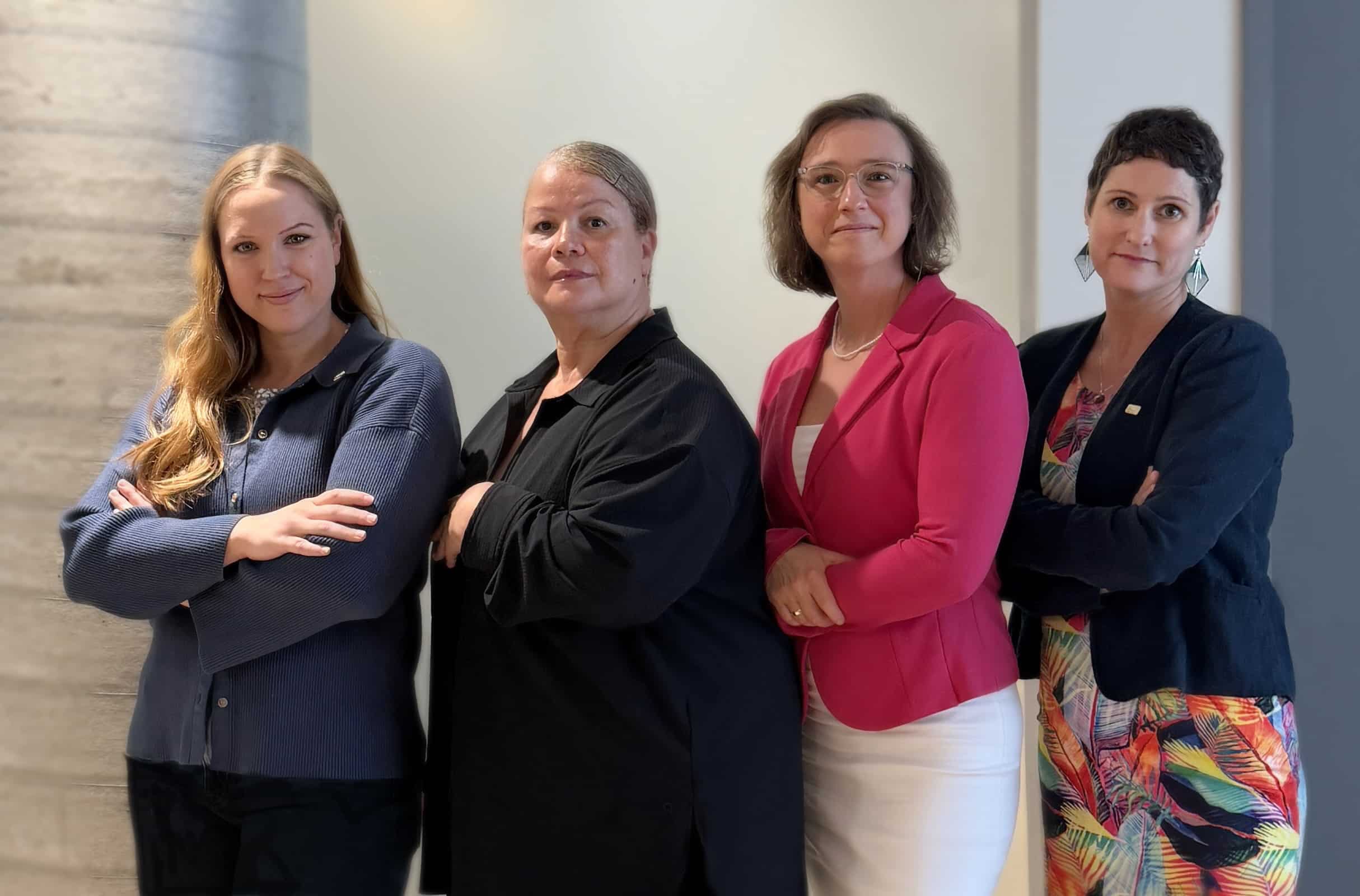
Marianne Rancourt (third from the right), surrounded by members of her team: Alexandra Bondin, Patricia Cantrel, and Isabelle Sauvageau.