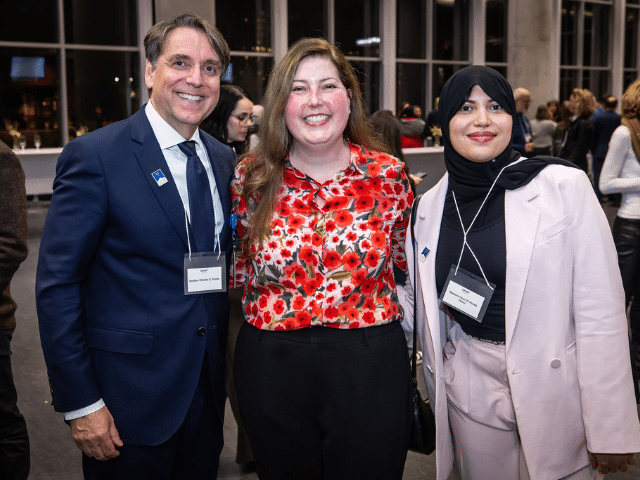
The Gratitude Movement offers a meaningful way to recognize the teams that transform a patient’s care journey.
At the start of the pandemic, 44-year-old Sarah Norgaard led a full life. As a deputy general manager in the marine transportation industry, she loved her job and travelled regularly.
Then, from one day to the next, climbing even a few stairs became challenging.
More than two years would pass before she received a diagnosis: pulmonary fibrosis, an irreversible disease with a progression that’s difficult to predict. For five years, her condition continued to deteriorate. Breathing became increasingly more difficult and she eventually had to depend on an oxygen tank. Until one day, her doctor began talking seriously of a lung transplant.
At that point, the CHUM was her only option in Quebec
Sarah was already familiar with the hospital. She had previously received treatment there for breast cancer, which had been diagnosed while her lung problems were still being investigated.
After four months on the transplant waiting list, the phone finally rang.
A donor had been found.
“I decided I was going to live.”
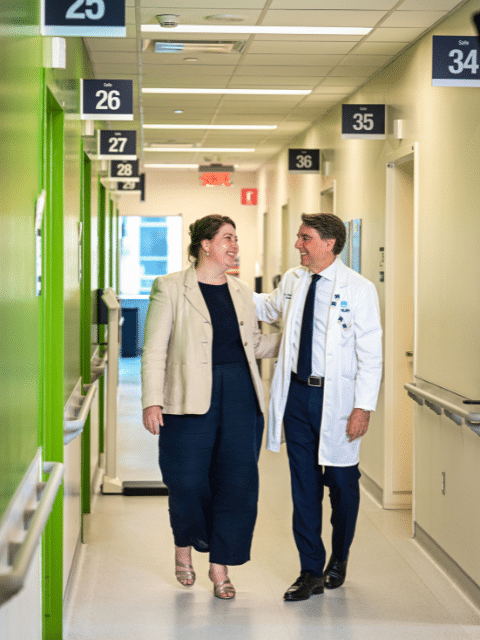
When Sarah woke up after her lung transplant, she fully realized how fortunate she was to be at the CHUM. Despite the tubes, machines and uncertainty that comes with such a procedure, she felt safe and knew she was in good hands.
“I woke up and I wasn’t disoriented. I knew where I was. I wasn’t confused or agitated. And I think it’s simply because I was so well cared for throughout the whole process.”
The road ahead would not be without its challenges. Sarah was hospitalized twice for pneumonia, and learning to live with her new organ–and the treatments needed to prevent rejection–was far from straightforward.
But one year after her transplant, she is doing well.
“I traded a terminal problem for a problem that can be managed.”
This experience changed the way Sarah sees life. After years of facing the possibility of death, she had to reflect on what truly mattered to her.
She was also aware that her second chance was intimately connected to a tragedy: the death of her donor. She then looked for a way to express her appreciation. That’s when her gesture of gratitude came about.
The Gratitude Movement: Recognizing the Entire Care Journey
Through The Gratitude Movement, Sarah was able to send messages to the people who gave her such excellent care and also make a donation to the CHUM Foundation in their names.
As she wrote her messages, Sarah realized that her gratitude expanded far beyond the individuals to include the entire team, the culture of collaboration that motivates them and a standard of care that never relies on just one person.
“What my hospital stays taught me is that vulnerability is not frightening when you’re supported by expertise, compassion and professionalism.”
For Sarah, The Gratitude Movement is more than an opportunity to say thank you. Her donation is a way of giving back to the team that ultimately gave her a future.
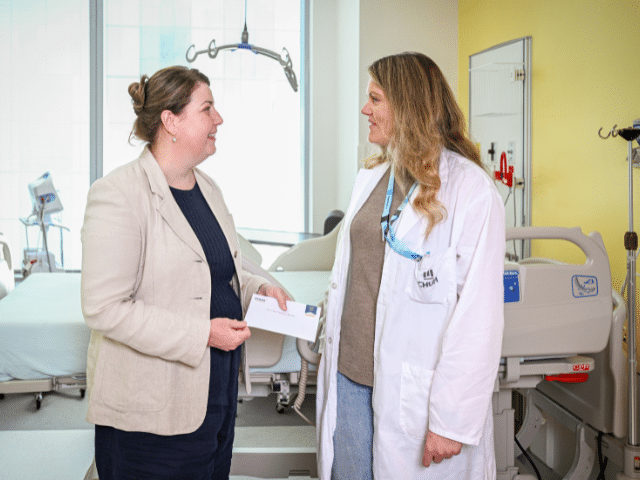
How can you show your appreciation?
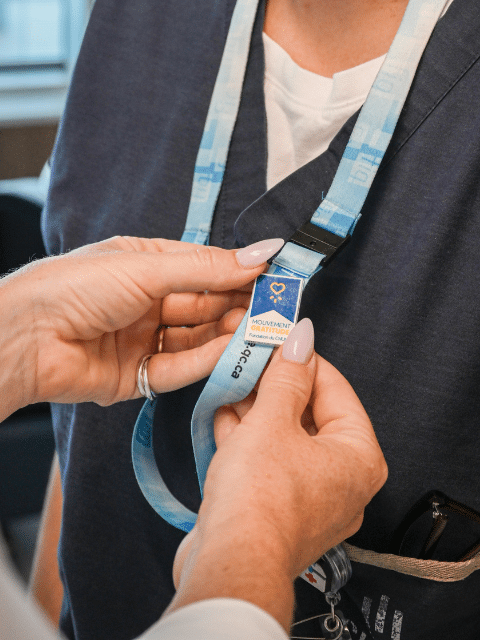
The Gratitude Movement gives voice to the gratitude felt throughout a care journey.
By making a donation to the CHUM Foundation, Sarah chose to honor the people who supported her before, during, and after her lung transplant.
Anyone wishing to thank a team or a staff member can learn about the Gratitude Movement and choose a meaningful way to express their gratitude. A message allows you to name the people who made a difference during your care journey, while a donation to the CHUM Foundation helps extend this gesture of gratitude.