

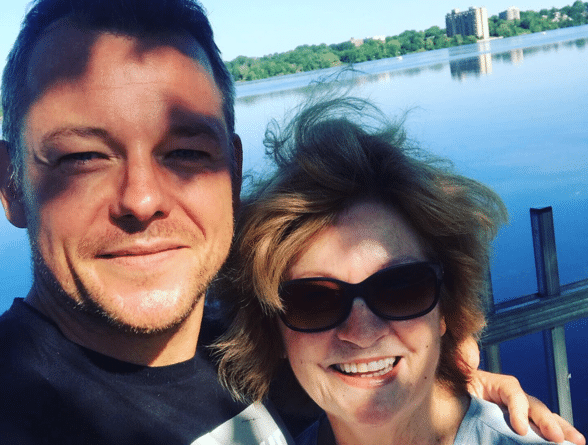
Recovery after psychosis is a journey that requires resilience. Over the years, Gabriel Julien’s aunt, Marielle, watched him face life-altering challenges, but also regain hope through the support of his family and the specialized care he received at the CHUM. Today, nearly a decade after his last psychotic episode, Gabriel leads a stable life and is actively involved in the mental health field.
“Without family and proper care, I don’t know where we would be today.”
A special bond
Long before the onset of mental illness, Gabriel held a special place in his aunt’s life.
“After his mother, I was often the person he called to tell me what was happening in his life,” recalls Marielle.
Like others in the family, she watched him grow into a young man full of energy, ambition and dreams. Yet, behind his accomplishments and public image, there was also a profound vulnerability.
The death of his mother left a deep wound. Looking back, Marielle believes that this loss marked a major turning point in both his personal journey and his mental health.
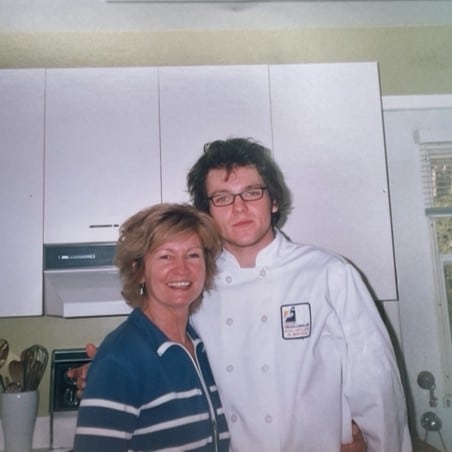
A family united during a psychotic episode in Mexico
One of Marielle’s most vivid memories is a psychotic episode that occurred while Gabriel was in Mexico.
Alone in a foreign country, Gabriel was admitted to a private psychiatric clinic, unable to return to Quebec without help.
When the family realized the seriousness of the situation, Marielle and her husband Jacques immediately boarded a plane without hesitation.
Upon their arrival, they were shocked to find Gabriel hospitalized, heavily medicated and in no condition to travel. For several days, the couple coordinated insurance claims, consular procedures, medical expenses and the medical transport required to bring him home.
“When we arrived, we realized the situation was far more serious than we had imagined,” she remembers.
Despite the complexity of the process, one priority guided every decision they made: bringing Gabriel home and ensuring he received the care he needed.

A mental health diagnosis awaits Gabriel
When Marielle reflects on her nephew Gabriel’s journey, one word immediately comes to mind: resilience.
For so many years, she witnessed a charismatic, talented and deeply loved young man endure challenges that few families are prepared to face. Psychotic episodes, hospitalization abroad, uncertainty, fear… but also hope, support and above all, the possibility of recovery.
A new perspective on mental illness
This experience also changed Jacques’ perspective on mental health.
Like many people, he had little understanding of psychotic disorders before witnessing one firsthand.
“Mental illness is insidious,” he explains.
Unlike a physical injury, suffering is not always visible. A person may appear to be doing relatively well while experiencing profound distress or gradually losing touch with reality.
For the Julien family, this awareness, supported by the CHUM, proved transformative. It helped them recognize warning signs more effectively and understand the importance of acting quickly when a crisis occurred.
The power of family support
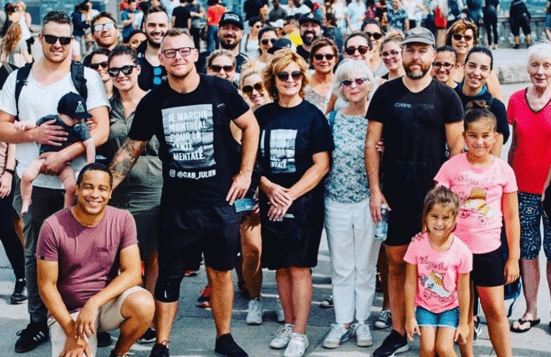
Once back in Quebec, Gabriel never had to face recovery alone.
His aunt describes how their extended family rallied around him from the very start. At the hospital and later at home, visits came one after another. Every day, someone was there.
It was this supportive network that became Gabriel’s safety net.
“Every day, someone was by his side,” his aunt says.
For Marielle, being surrounded by loved ones is an essential part of recovery. After the loss of his mother, several family members naturally took on a greater role in his life, supporting him through difficult times and celebrating his successes.
The importance of specialized care
While family played a crucial role, Marielle also emphasizes the profound impact of Gabriel’s care team.
She particularly highlights the contribution of Dr. Amal Abdel Baki and professionals at the CHUM’s JAP Clinic, who support young people experiencing a first psychotic episode.
According to Marielle, beyond medical treatment, the team helped Gabriel rebuild his confidence and envision a future once again.
“Dr. Amal Abdel Baki helped him believe in himself and regain his self-esteem,” she adds.
Today, Gabriel shares his experience in the hope that it will help others. As an engaged mental health advocate and peer support worker, he is proof that long-term recovery is possible.
Thanks to donations made to the CHUM Foundation, medical and research teams have the resources they need to develop innovative and personalized approaches to mental health care.
For families, it means having the assurance that a loved one navigating the uncertainty of mental illness can receive the best possible care and support on their journey toward recovery.